The short version
- Durbanville's hard borehole water drops limescale inside your geyser every time it heats.
- That scale burns out the element, wastes electricity and rusts the tank, cutting geyser life from about 10 years to two or three.
- The real fix is treating the water before it's heated (a softener or scale unit plus sediment and iron filters), not fighting scale inside the tank.
- If an element has already failed, test the water before replacing anything, because the problem is upstream of the geyser.
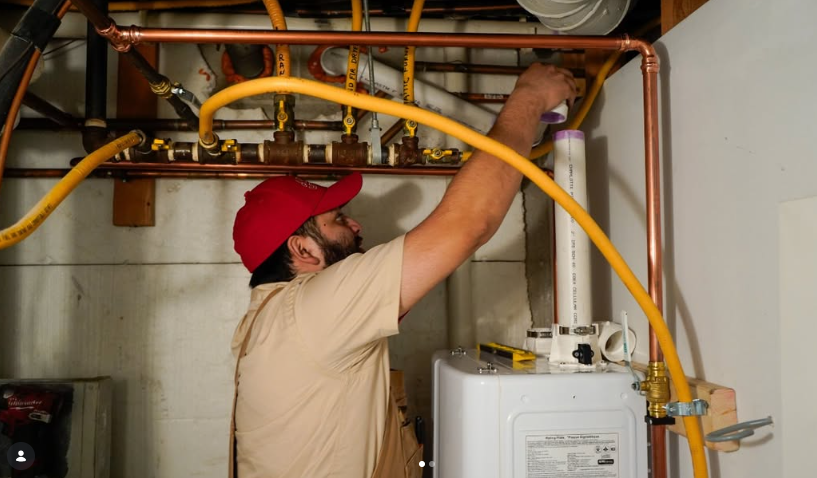
We get called out to geysers all over the northern suburbs, from Sonstraal and Kenridge through Eversdal, Vierlanden and Pinehurst. When we open up a failed geyser on a property running borehole water, the story is nearly always the same: a heating element caked in chalky white limescale and a layer of sediment sitting on the tank floor. The homeowner expected ten years out of that geyser. They got three.
Here is exactly why it happens, how to tell it is happening to you, and what actually stops it, without the sales spin.
What is really in Durbanville's borehole water
Groundwater under Durbanville filters through Malmesbury Group shale and the calcium-rich soils of the northern suburbs. As it sits in the ground it dissolves calcium and magnesium out of the rock. Water carrying a lot of those two minerals is what everyone means by "hard water", and a good deal of the borehole and well-point water pulled up around Durbanville is moderately to very hard.
Depending on where your property sits and how deep the borehole goes, that water can also carry:
- Iron and manganese, the cause of orange-brown staining on paving, pool surrounds and white laundry.
- Sediment and fine sand, grit that settles in tanks, cisterns and the bottom of a geyser.
- A high total dissolved solids (TDS) reading, the overall mineral load, which climbs in dry years as the water table drops.
None of this makes the water bad for the garden. It makes it hard on anything that heats it.
How scale actually kills a geyser
Cold, hard water holds its minerals in solution and you would never know they were there. The moment you heat that water past roughly 60 °C, which is exactly what a geyser does all day, the calcium and magnesium fall out of solution and cement themselves onto the nearest surface as limescale. In a geyser, the nearest surfaces are the two that matter most: the heating element and the floor of the tank.
From there it becomes a chain reaction:
- The element overheats. A scaled element cannot shed heat into the water properly, so it runs hotter and hotter inside its own crust until it burns out. This is the single most common geyser failure we see on borehole properties.
- Your electricity bill climbs. Even a thin scale layer forces the element to work far longer to heat the same tank. You are paying to heat limescale before you heat water.
- The thermostat gets fooled. Scale insulates the thermostat from the real water temperature, so it cycles wrong, with short bursts, nuisance tripping, or water that never quite gets hot.
- The tank floor silts up. Sediment and scale build a layer on the base of the geyser, cutting how much hot water you actually get and creating pockets where the steel corrodes faster.
- The sacrificial anode is spent early. Every geyser has an anode rod that corrodes on purpose to protect the tank. Hard, mineral-heavy water eats through it far quicker, and once it is gone the tank itself starts to rust from the inside.
Put together, that is how a geyser rated for a decade fails in a fraction of the time, and why so many borehole homes in Durbanville are on their second or third element already.
The load-shedding multiplier
Scale and power cycling are a bad pair. Every time the grid comes back, a scaled element takes a hard surge on a surface that is already running too hot. If your home is on both a borehole and regular load shedding, your geyser is being attacked from two directions at once.
Six signs the scale is already winning
Scale does its damage out of sight, but the symptoms show up around the house long before the geyser actually dies. If you are on borehole or well-point water and you notice these, it is worth acting early.
- Hot water runs out faster than it used to. A silted tank holds less usable hot water. If the second shower is suddenly cold when it never used to be, the tank floor is filling up.
- The geyser is noisy, popping or rumbling. That kettling sound is water bubbling up through a layer of scale on the element and tank base. A quiet geyser that started grumbling is scaling up.
- Your electricity bill crept up with no lifestyle change. A scaled element runs much longer to hit temperature. A steadily rising bill with no new appliances often traces back to the geyser.
- Chalky white scale on taps, kettles and shower glass. What you see on the kettle element and the shower door is exactly what is happening inside the geyser where you cannot see it.
- Orange-brown staining on paving or laundry. A sign of iron in the borehole water. Where there is iron there is usually hardness too, and both punish a geyser.
- You are already replacing elements every few years. One failed element can be bad luck. A second or third in a short span is not. It is your water telling you the problem is upstream of the geyser.
What actually fixes it (and what only helps)
Here is the honest version. You cannot beat scale by fighting it inside the geyser. You have to stop it before the water is heated. The measures below run roughly from "treats the cause" to "manages the symptom", and a good setup usually combines a few.
Treat the water at the point of entry
This is the real fix. An ion-exchange water softener swaps the calcium and magnesium out before the water ever reaches your geyser, so scale simply cannot form. For homes that would rather not add sodium or maintain a softener, a scale-reduction / template-assisted crystallisation unit conditions the minerals so they stay suspended instead of sticking. Fitted where the borehole line enters the house, either one protects the geyser, the kettle, the washing machine and every mixer in the home at once.
Filter out sediment and iron first
Borehole water almost always needs a sediment filter, and where there is staining, an iron/manganese filter as well. These sit ahead of the softener and stop grit and iron from fouling both the treatment unit and the geyser. On a Durbanville borehole this stage is rarely optional.
Service the geyser on a borehole schedule
Even with treatment, a geyser on groundwater benefits from more attention than one on municipal water:
- Flush the tank to clear settled sediment before it bakes into a hard layer.
- Replace the sacrificial anode on schedule. This single, cheap part is what stands between hard water and a rusted tank.
- Fit the correct element and set the thermostat sensibly. Running slightly cooler slows scale formation without leaving you short of hot water.
One thing to get right by law
Borehole water must be kept completely separate from the municipal supply, with proper backflow prevention, and a geyser installation must meet SANS 10254. Cross-connecting the two, or feeding a geyser untreated groundwater, is both a health risk and a compliance problem. This is a job for a registered plumber, not a weekend DIY.
Why this hits Durbanville harder than most
Two things stack up here. First, Durbanville has one of the highest densities of private boreholes and well-points in Cape Town. The drought, the big gardens and the sandy northern-suburbs soil all pushed households underground for water. Second, the local geology serves up genuinely hard, mineral-rich groundwater. Put a lot of hard water through a lot of geysers and you get exactly what we see on call-outs: premature element failures clustered right across the suburb.
The good news is that it is entirely preventable. A water test tells you what you are actually dealing with, and the right treatment turns a geyser-killer into ordinary, geyser-friendly water. Homeowners who sort the water out once tend never to think about their geyser again. If your Durbanville home runs on a borehole and your geyser is noisy, slow to heat, or on its second element, get the borehole water tested before you replace anything else.
Borehole & geyser FAQs
Is Durbanville borehole water hard?
A lot of it is. Groundwater here moves through Malmesbury shale and calcium-rich soils, so many boreholes and well-points come up moderately to very hard, meaning high in dissolved calcium and magnesium. The only way to know your exact number is a water test, but scaled-up kettles, spotty glasses and a labouring geyser are the everyday giveaways.
Can hard water really damage a geyser?
Yes. When hard water is heated, the minerals drop out as limescale. It coats the element and settles on the tank floor, which makes the element run hotter, wastes electricity, trips the thermostat and shortens the geyser's life. That often cuts a 10-year element down to two or three.
How do I protect my geyser from borehole scale?
Treat the water before it reaches the geyser, usually with an ion-exchange softener or a scale-reduction unit at the point of entry, plus sediment and iron filtration if the borehole needs it. Flushing the geyser, replacing the anode on schedule and fitting a fresh element help too, but they manage the symptom rather than the cause.
Should I connect my borehole straight to my geyser?
Not without treatment and the correct plumbing. Untreated borehole water carries sediment, scale-forming minerals and sometimes iron and bacteria, and by law it must be kept fully separate from the municipal supply with proper backflow protection. Have a plumber test the water and set up filtration first.
How much does it cost to fix?
It depends on your water and your setup. A sediment filter is modest, while a full softener-and-filtration system is a bigger once-off that protects the whole house. We test first, explain your options, and give you an upfront price before any work starts. See our plumbing prices page for how we quote.
Written by the team at The Durbanville Plumbers, local plumbers serving Durbanville, Sonstraal Heights, Kenridge, Eversdal, Vierlanden, Pinehurst, D'Urbanvale, Kraaifontein, Brackenfell and Bellville. This guide is general information, not a substitute for an on-site inspection of your specific system.